1
Step 1
Select Your Goal
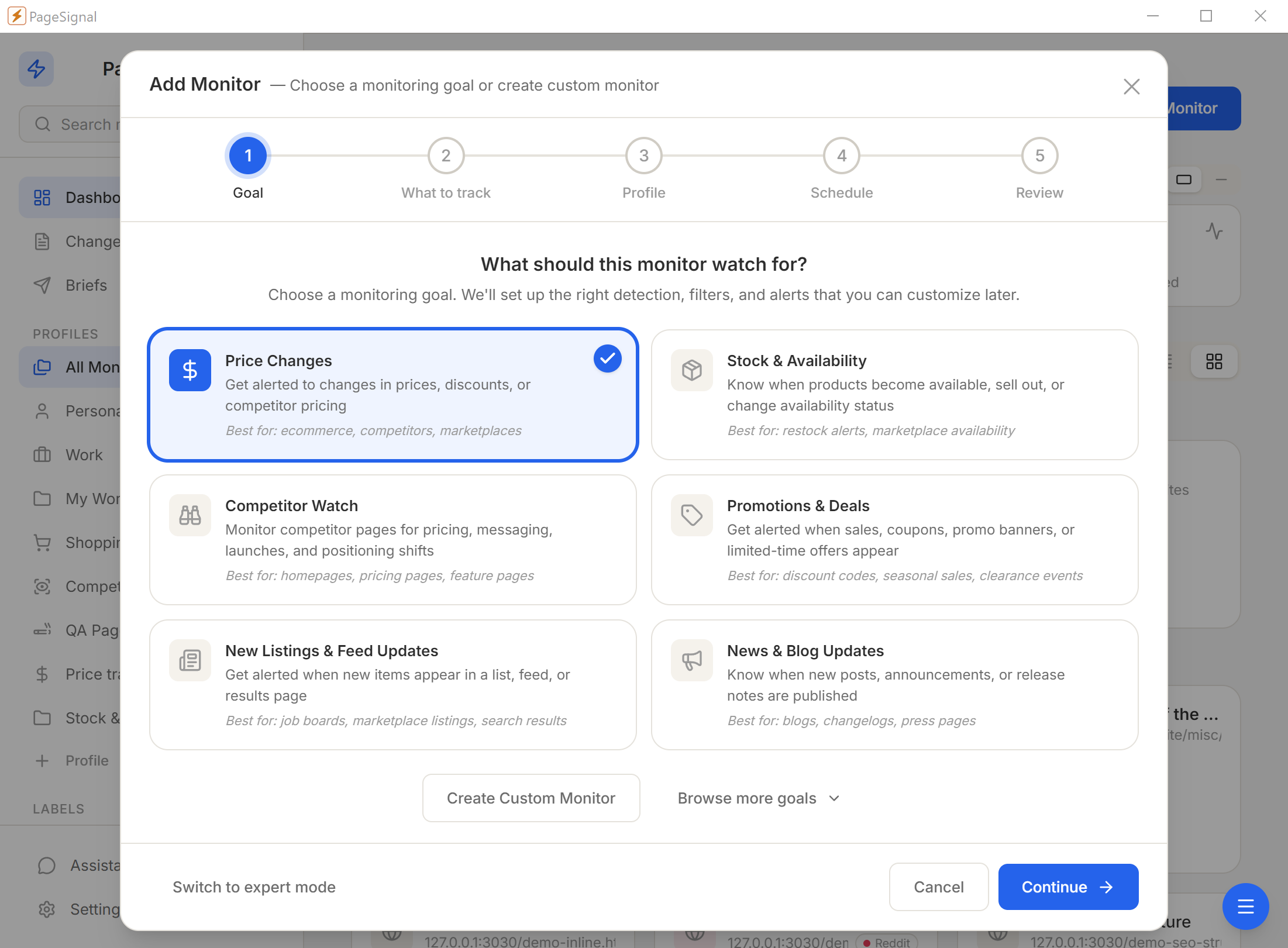
What should this monitor watch for? We'll set up the right detection, filters, and alerts that you can customize later.
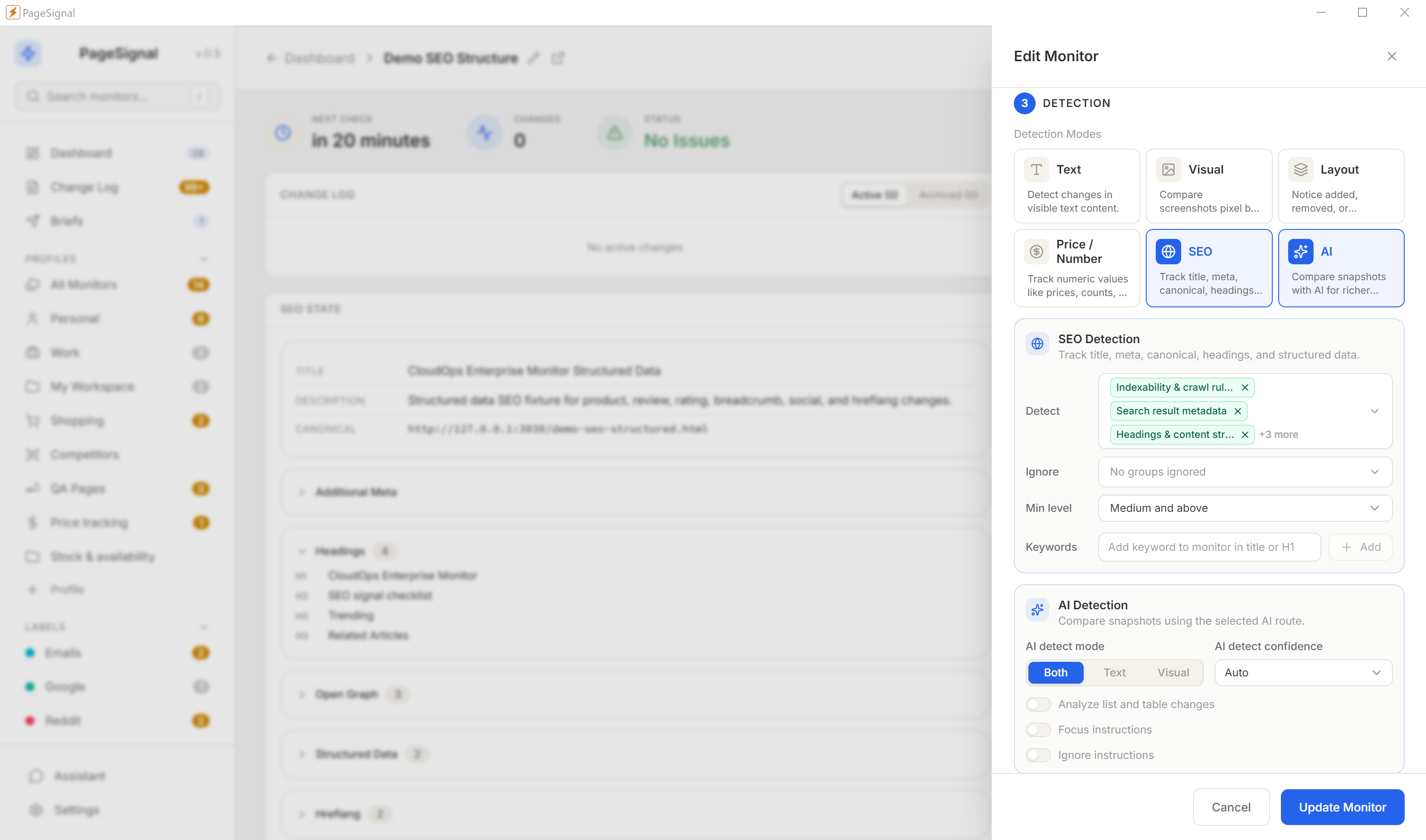
9 signal groups, 4 severity levels, keyword tracking on every page. Built for in-house SEO teams and agencies managing client portfolios.
A developer removes a canonical tag while cleaning up a template. A CMS update rewrites the H1. A content migration accidentally adds a noindex directive to a category that drives thirty percent of your organic traffic. Structured data breaks when a schema field is removed from a product template. None of these changes announce themselves.
By the time you notice in Search Console, weeks have passed. Crawl cycles mean the impact may not even show up in your impression data for another ten days. You are debugging a problem that happened a month ago, with no record of when it changed, what it looked like before, or which deployment caused it.
"By the time Search Console shows the damage, the change is a month old."
PageSignal watches your SEO signals around the clock and alerts within the next check interval — early enough to investigate before a small technical change becomes a ranking problem.
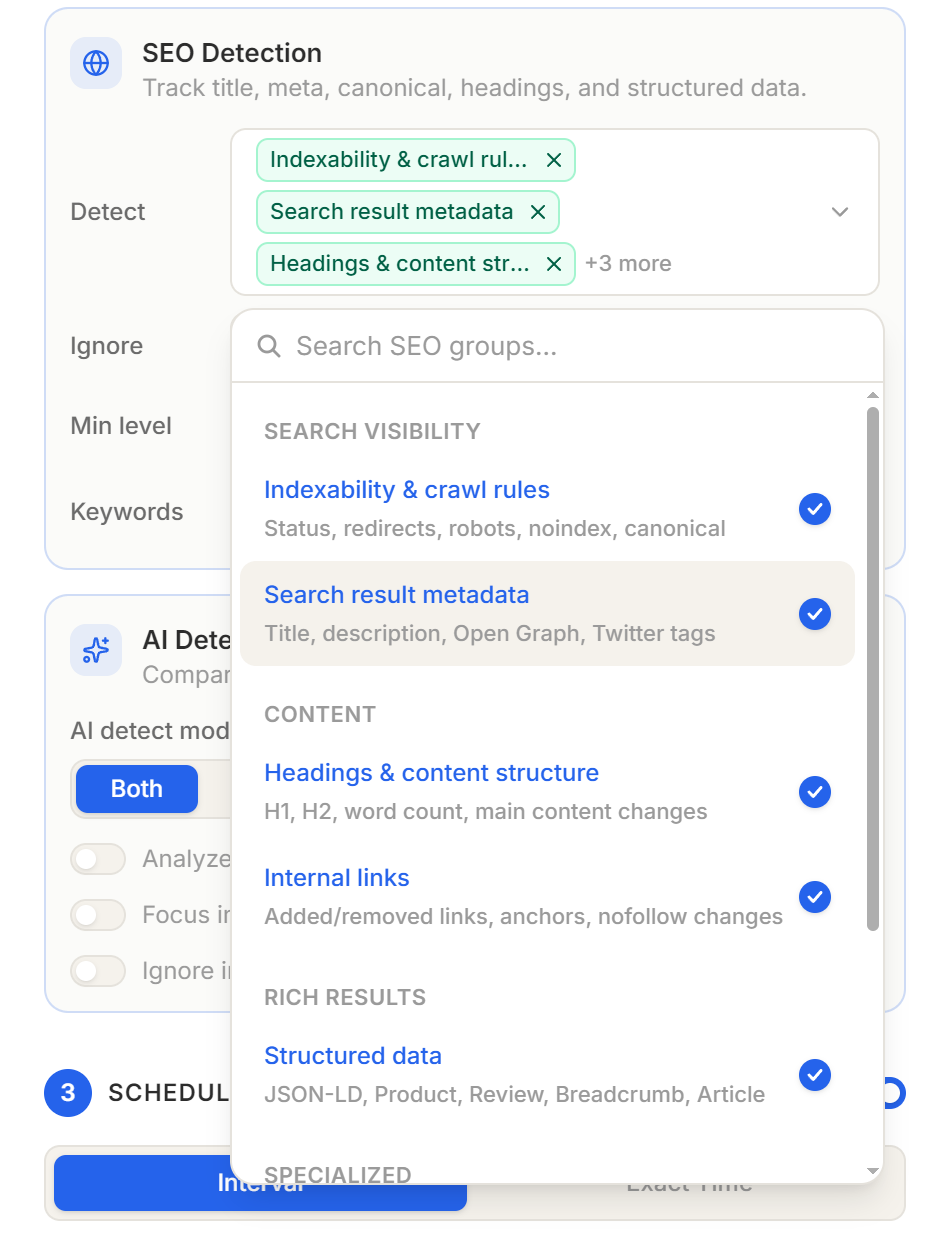
Detection is organized across nine groups that map to the areas of a page that affect search performance — indexability, search metadata, content structure, structured data, internal links, ecommerce, international, social metadata, and page experience. Each group catches a specific class of change: noindex additions, title/meta rewrites, canonical pivots, schema breaks, hreflang deletions.
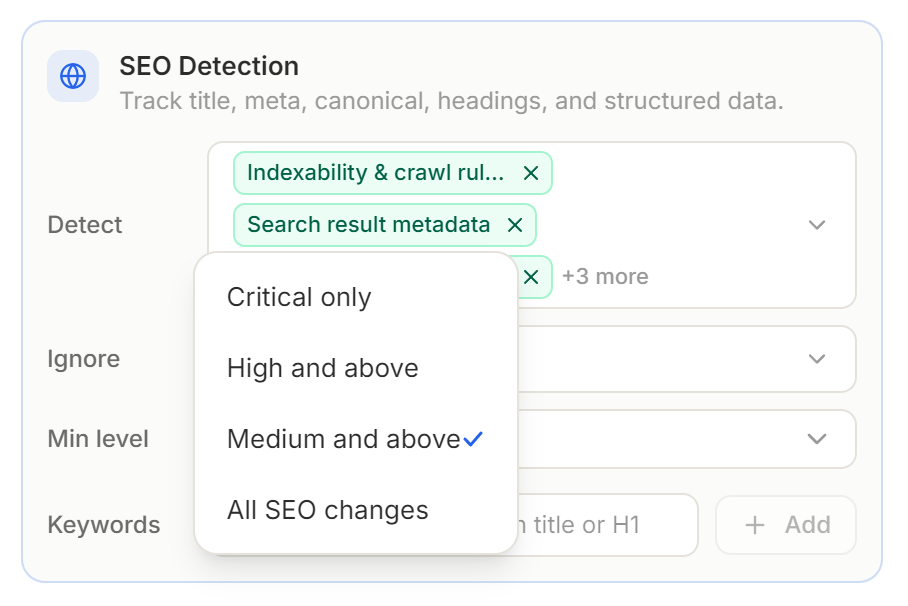
Every change gets a severity assignment: critical, high, medium, or low. Critical catches noindex appearing on indexable pages, canonical pointing at unrelated URLs, structured data being removed, hreflang sets being deleted. High covers title-tag wipes and meta-description clears. Medium covers heading structure shifts. Low flags informational metadata. Set a minimum threshold per monitor — high-priority pages on medium+, lower-priority on critical-only.
Up to 20 keyword targets per monitor, each up to 80 characters. PageSignal alerts when your target keywords appear in — or disappear from — the title tag, the H1, or both. This matters because title and H1 keyword presence is one of the clearest on-page ranking signals, and one of the easiest things for a CMS or editor to accidentally remove.
Profiles group monitors by client or domain. Open the dashboard, filter to one client, see only their monitors and recent changes. Labels add cross-cutting categorization by page type — homepage, category, product, blog post, landing page — so you can scope to "all product page structured data changes across every client" in a single view.
SEO detection with critical/high threshold on your highest-traffic pages. Catch noindex, canonical, and structured-data changes within the next check interval after every deployment.
Identify the pages ranking above you for your target keywords. Text and layout detection alerts you when a competitor expands their coverage of a topic or restructures content.
SEO detection with critical severity for structured-data signals on your product page template. When a required schema property is removed, you get alerted before rich result eligibility is affected.
Configure weekly digest notifications with AI summary enabled. Every Monday, receive a digest that explains in plain language which client sites had meaningful SEO changes and what the impact might be.
Plugin upgrades and CMS platform updates are common causes of site-wide SEO configuration changes. Monitors on representative pages across each page type catch indexability shifts before you complete the update review.
International SEO is fragile. An hreflang attribute pointing to the wrong region can send the wrong language version of a page to the wrong market. SEO detection on key pages catches these the moment they ship.
OG tags control how pages appear when shared on social platforms. Monitor social metadata changes on high-share pages so you catch broken OG configurations before they affect distribution.
A single change to robots.txt can block entire sections from being crawled. Text monitors on robots.txt and SEO detection on high-value pages catch file-level and page-level indexation changes in real time.
Track structured data on your top competitors' key pages. When they add new schema types or implement markup you do not have, you receive an alert with what changed and what it means for their rich-result eligibility.
Text, layout, visual diffs, price/number tracking, SEO signals, and AI-evaluated changes. Run one alone or combine them with AND/OR gating on the same monitor.
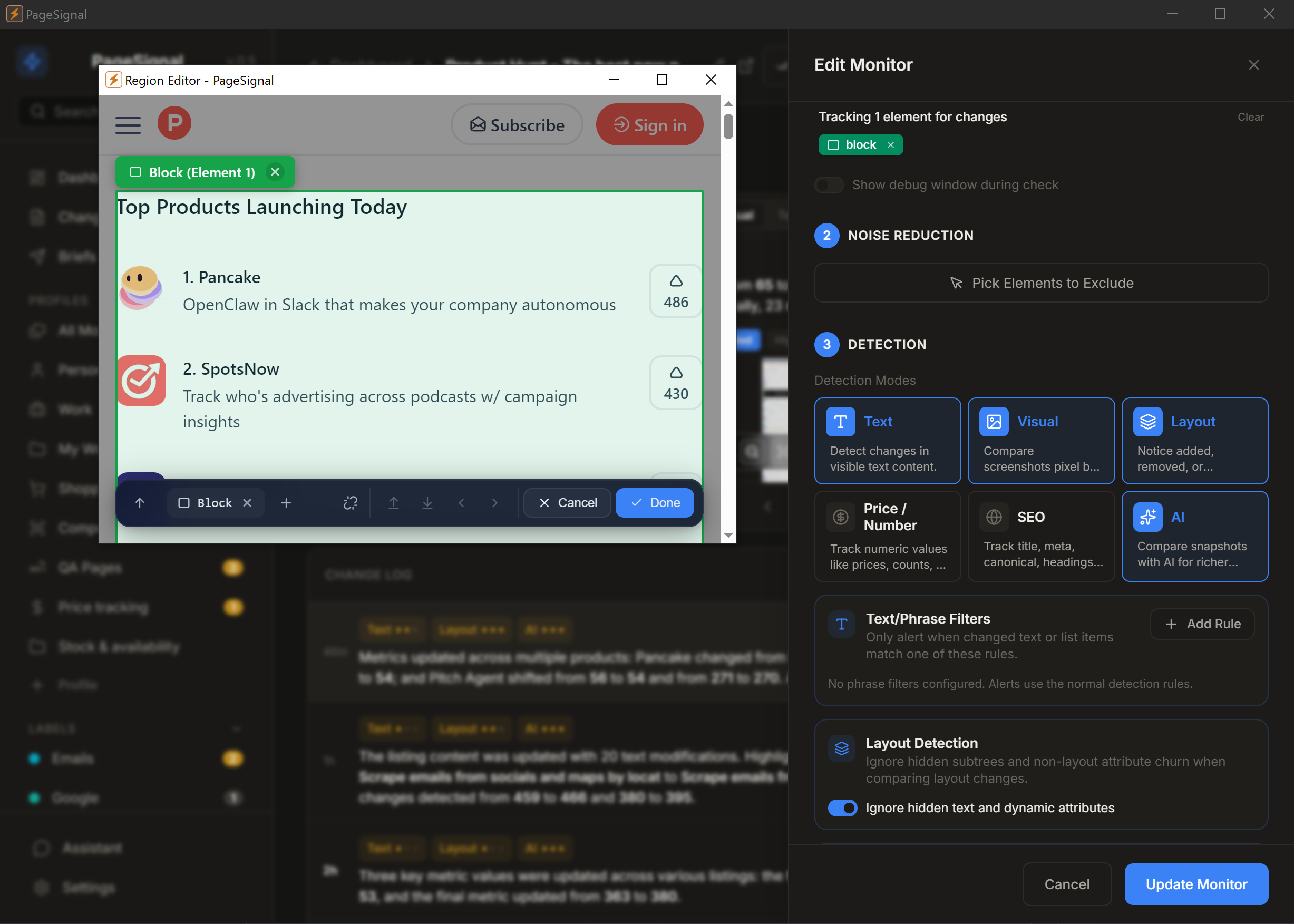
Select any element on a page to monitor just that — a price, button, paragraph, anything.
Get a daily brief of what matters most across the pages you watch.
Strips ads, timestamps, and carousels. Only real changes reach you.
Checks pages in a real browser so JavaScript, sessions, and dynamic content render correctly.
Set rules like "notify me only if price drops below $50" or "alert when 'Sold Out' disappears."
OpenAI, Anthropic, Google Gemini, or local Ollama. Your key, your model, your route — plain-English summaries of every change.
Reuses your active browser session to monitor pages behind authentication.
Human-like rendering with jitter bypasses Cloudflare and bot detection.
Email digest for weekly client reports · Webhook into ticketing or Telegram · Telegram for on-call critical alerts.
No accounts, no cloud, no complicated setup.
What should this monitor watch for? We'll set up the right detection, filters, and alerts that you can customize later.
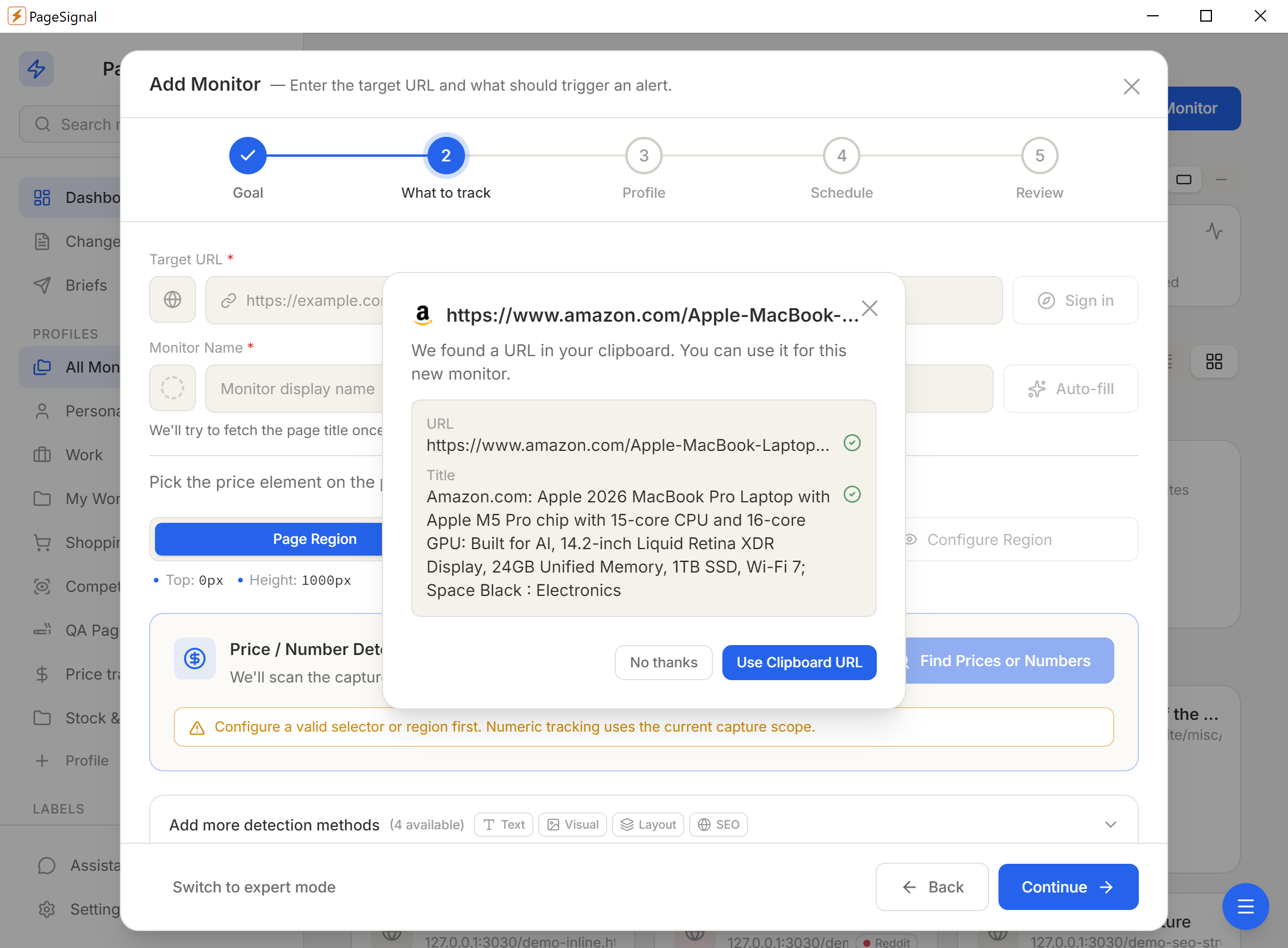
Pick one of six detection modes — or combine them with AND/OR gating on a single monitor.
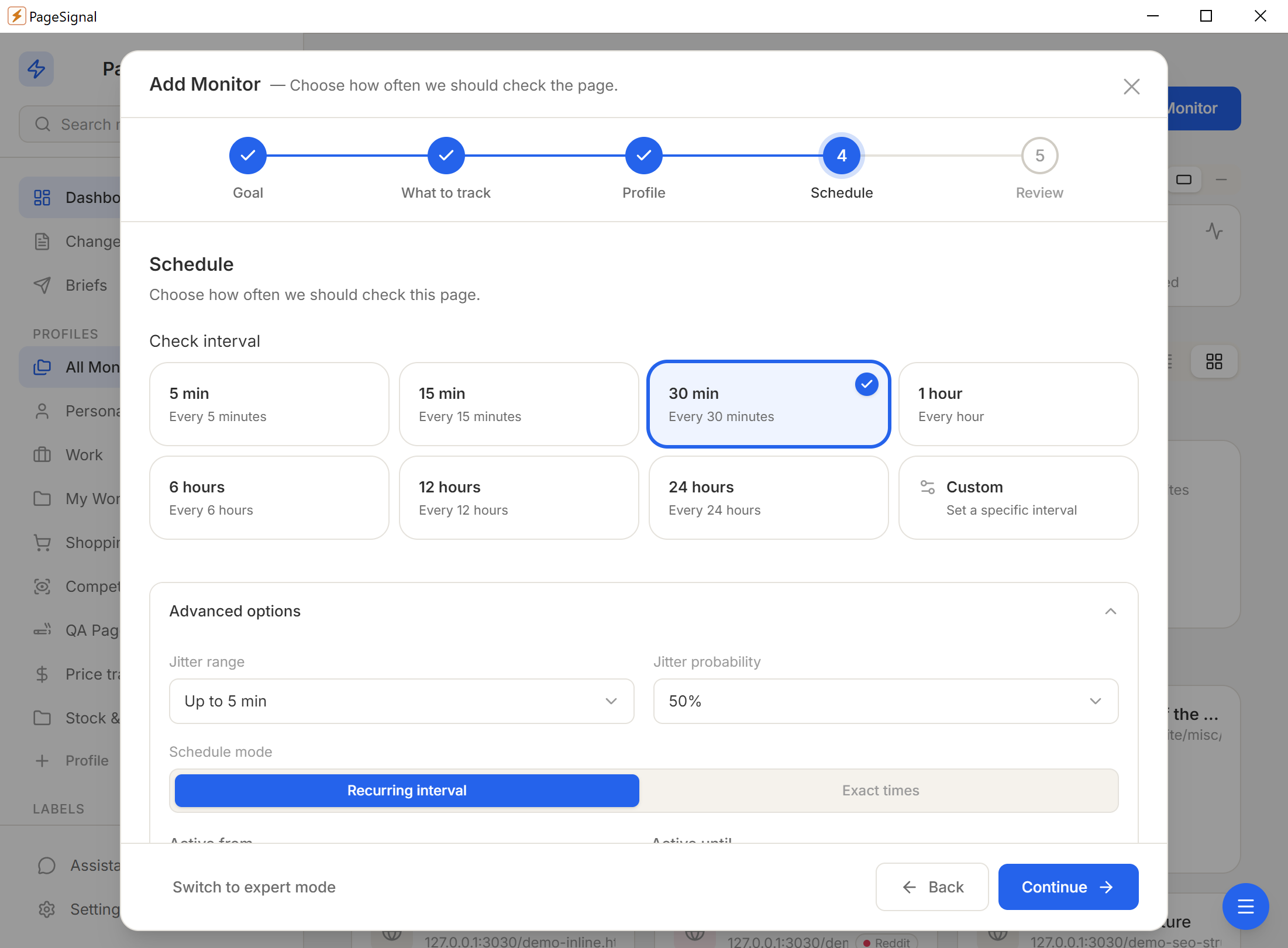
Schedule (60s–24h), text match rules, price thresholds, AI focus instructions, noise filters.
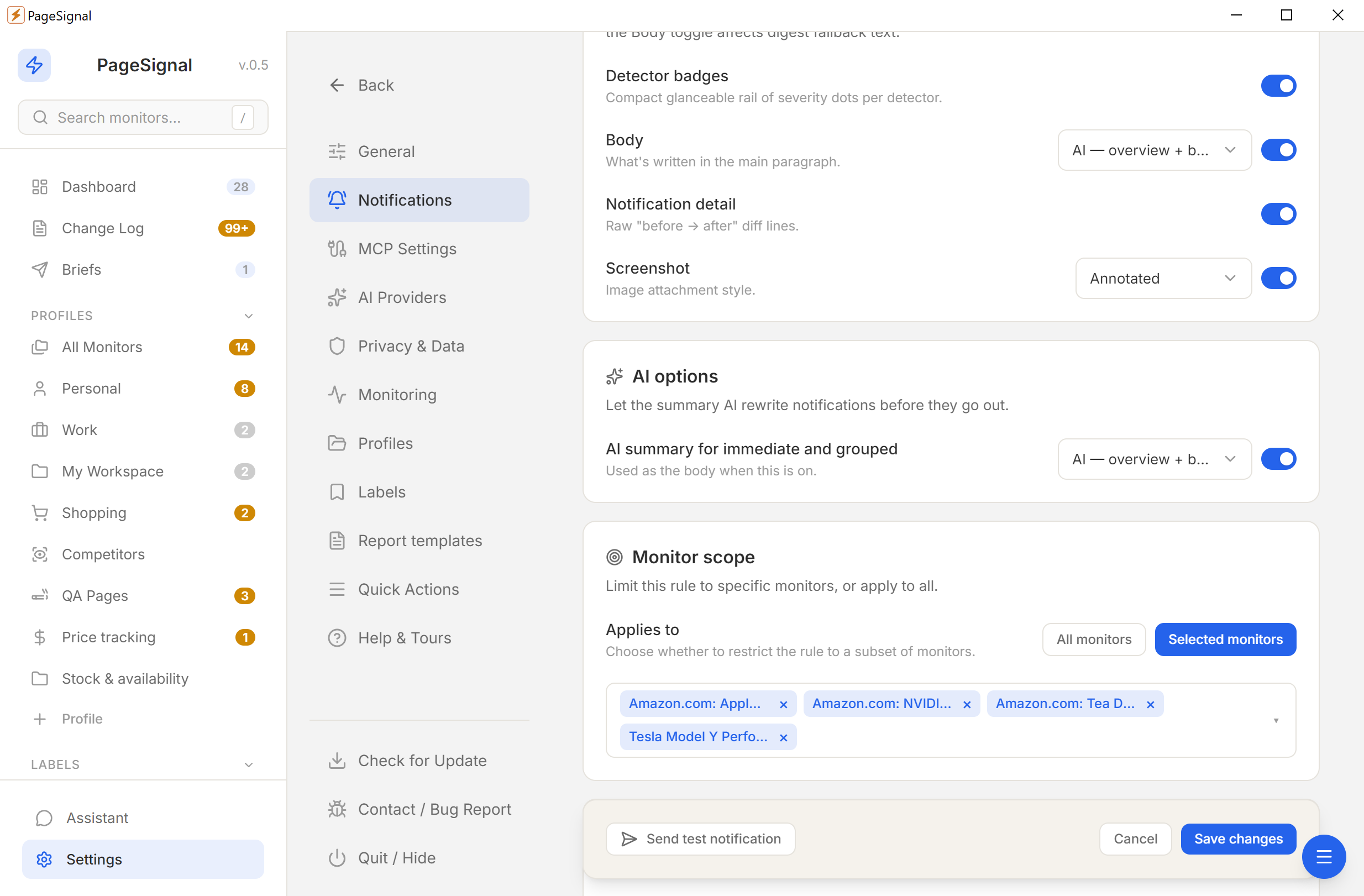
Desktop, email, Telegram, or webhook — immediate, grouped, or digest.
No accounts. No cloud. No tracking. Everything stays on your device.
Nothing touches a remote server.
No sign-ups or personal info.
No analytics, no phone-home.
YML and ZIP backups, anytime.